Bridging the Gap: How 3D CAD Modeling Accelerates Physical Prototype Development
For independent inventors and growing businesses alike, the journey from a brilliant conceptual sketch to a tangible, market-ready product is filled with critical engineering decisions. Historically, this transition involved significant trial and error, costly physical material waste, and extended development timelines.
Today, the secret to bypassing those traditional hurdles lies in high-fidelity 3D Computer-Aided Design (CAD) modeling.
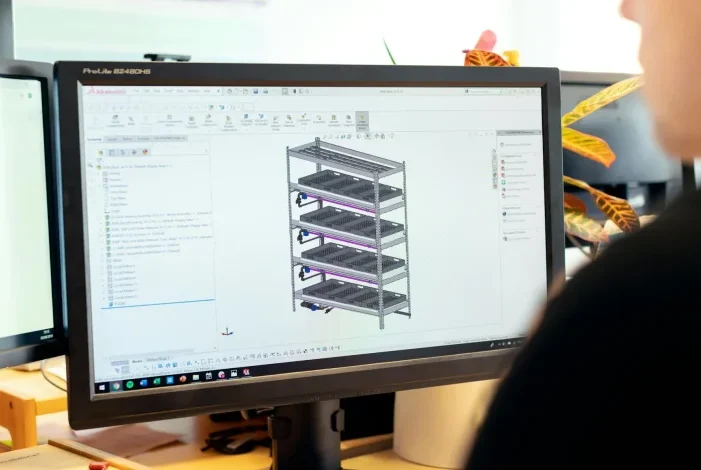
By serving as the digital foundation for physical fabrication, advanced CAD modeling has completely transformed how modern prototypes are engineered, validated, and brought to life.
1. Digital Validation Before Physical Fabrication
The primary advantage of a robust 3D CAD model is the ability to test a product's functionality before a single piece of material is cut or 3D-printed.
Through digital modeling, engineers can analyze mechanical fits, test tolerances, and simulate how moving parts interact. If a casing is too thin or an internal component lacks clearance, it can be adjusted instantly in the software. Catching these design flaws in the digital phase saves thousands of dollars in wasted physical materials and prevents critical errors down the line.


2. Streamlining Communication with Manufacturers
A rough drawing or a basic description leaves too much room for interpretation when dealing with manufacturing facilities. A precise 3D CAD file acts as a universal language.
When your project is backed by comprehensive digital schematics, it provides clear direction regarding dimensional boundaries, wall thicknesses, and assembly configurations. This level of technical clarity ensures that your physical prototype is built exactly to specification, paving the way for a seamless transition into mass production (Design for Manufacturing).
3. Speeding Up the Prototyping Sprint
In modern product development, speed to market is everything. Traditional prototyping methods could take weeks or months just to output a single iteration.
With a completed 3D CAD model, the development pipeline accelerates significantly. The digital files can be fed directly into modern prototyping hardware—such as CNC machines, rapid 3D printers, or laser cutters—turning digital data into a physical model in a fraction of the time. This agility allows creators to test, refine, and finalize their MVPs (Minimum Viable Products) faster than ever before.
The Bottom Line
Every successful physical product begins with an ironclad digital roadmap. By investing in professional 3D CAD modeling early in your development cycle, you don't just protect your idea—you optimize its structural integrity, lower your development costs, and ensure your final prototype is completely ready for investor presentations and consumer testing.